ESL Teaching Certification: Key Facts & Tips
1 year ago
Teaching English as a second language is one of the most exciting ways to work abroad, explore new cultures, or even begin a fresh career. But to get started, you need an ESL certification. With so many programs and acronyms out there, it’s easy to feel overwhelmed. Don’t worry—this guide will break it all down for you.

What is ESL certification, and why is it important?
An ESL (English as a Second Language) certification shows that you’re trained to teach English to non-native speakers. It covers how to teach grammar, speaking, listening, reading, and writing skills effectively. You’ll also learn about classroom management, lesson planning, and how to adapt to learners from different cultural backgrounds.
This certification is your ticket to legitimate teaching jobs—especially in countries across Asia, the Middle East, and Latin America where English teachers are in high demand. Most employers require at least a 120-hour ESL certificate to consider your application.
Do I need a degree to take an ESL certification course?
Not at all. While having a degree can open more teaching opportunities (especially in certain countries), it’s not required to enroll in an ESL course. Many people take ESL courses right after high school or while changing careers.
The key requirement is your fluency in English and your willingness to learn how to teach it. ESL certification is all about opening doors, not closing them.
How do I choose the right ESL certification program?
Here are four must-check factors:
Reputation: Choose a course provider with positive reviews, strong alumni success stories, and a well-known name in the ESL world.
Accreditation: Make sure the course is accredited by respected bodies like the DEAC (Distance Education Accrediting Commission). This ensures your certificate will be recognized by employers.
Job Support: Good programs often provide job placement assistance or have partnerships with schools worldwide. Be wary of flashy “guaranteed job” promises—they’re often too good to be true.
Quality Materials: The best programs include lesson plans, teaching resources, and real tutor support. If a course charges extra for basic materials, consider it a red flag.
Do I need teaching experience to enroll in an ESL course?
No experience? No problem. ESL certification programs are designed for beginners. They teach you the skills you need to start from scratch, whether you’re 18 or 58. Many successful ESL teachers had zero classroom experience before starting their courses.
Even advanced courses like CELTA or DELTA don’t require prior teaching work—just dedication and strong English skills.
What are the essential requirements to get certified?
Here’s what you’ll need:
Fluency in English: You don’t need to be a native speaker, but you should have a high level of English communication skills.
Time and Effort: A proper ESL certification course takes at least 120 hours. Avoid “weekend” or cheap Groupon courses—they usually don’t prepare you for real teaching jobs.
Financial Investment: Expect to spend a few hundred dollars on a solid course. High-end programs like CELTA cost more but offer deeper training.
Enthusiasm: A passion for the English language and a desire to help others is the most important ingredient of all. If you’re genuinely excited to teach, your students will feel it too.
Becoming an ESL teacher starts with choosing the right certification course. Look for quality, commitment, and support—not just the lowest price. With the right training and attitude, you can start teaching English around the world and making a difference in people’s lives.
-

TESOL Jobs: Cost & Certification
Discover the costs associated with TESOL certification and learn how to select the ideal program for... -

TEFL Diploma vs. Certificate: Your Path to Teaching Excellence
Explore the differences between TEFL diplomas and certificates to decide which qualification best fi... -
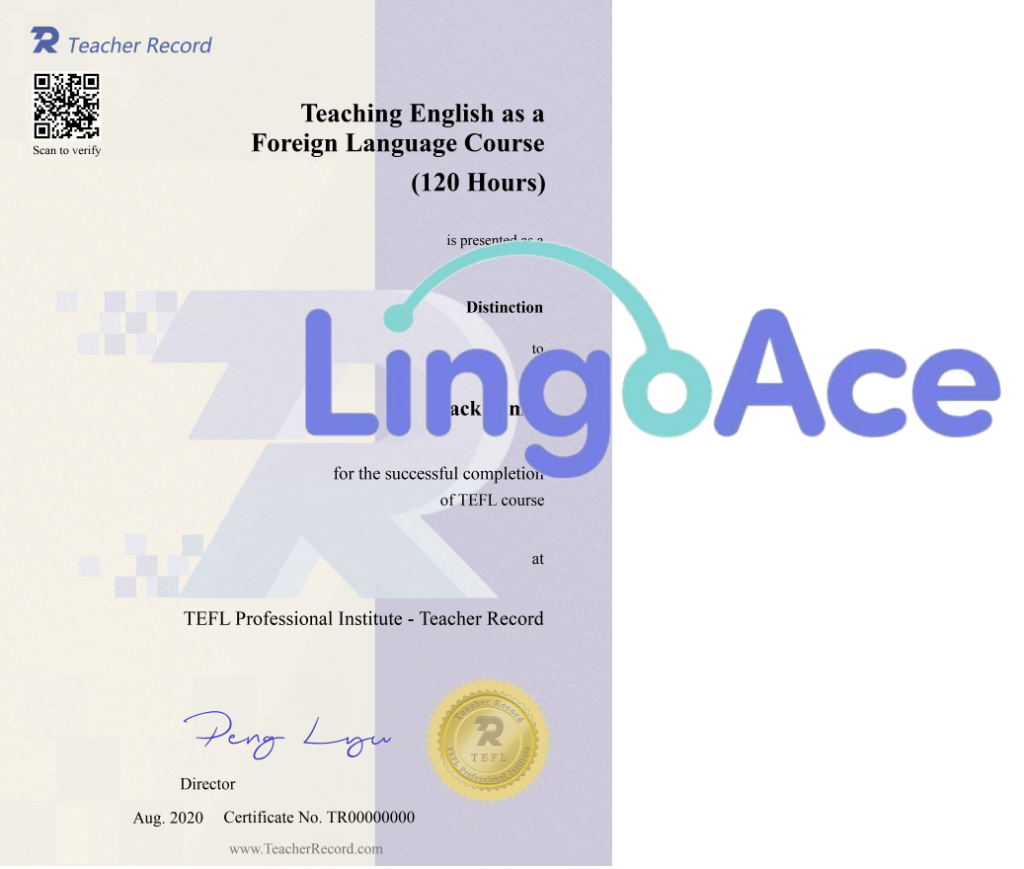
Lingo Ace TEFL
TeacherRecord is the official TEFL partner of Lingo Ace, tasked with providing TEFL (Teaching Englis...

-
 8 US Dollar/HourTeach Online
 -
-
-
-

-

-